Instructions to build a sun tracker
The video, https://youtu.be/fx4wf4lMxDE, presented the parts in a top-down order. To offer new perspective, these instructions follow a bottom-up order. But the product is the same.- Determine your latitude. You can do this by visiting Google Maps. Right-click on your location. You will see two numbers at the top of the popup. The first number is your latitude.
-
Find a box.
We are going to cut off one corner from this box.
This corner will hold the time-of-day wheel at the proper angle for your latitude.
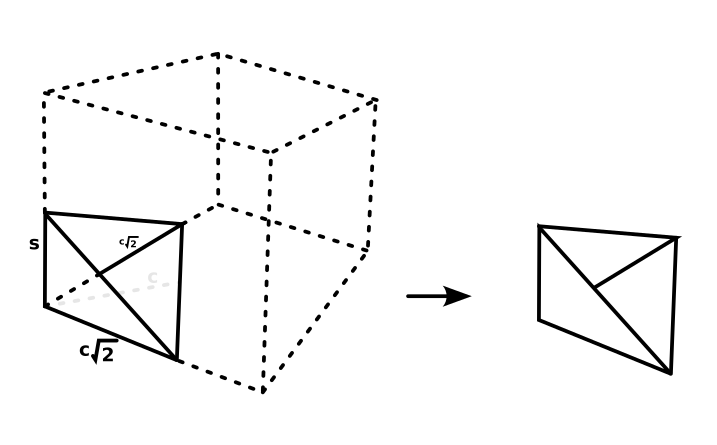
The two edges of this corner, labeled c√(2), that run along the ground should be equal in length. Let's say they are 30cm long. Then the vertical edge, labeled s should have a length of tan(90 - latitude) * 30cm / sqrt(2). Mount this corner on top of the base box, and the cut edge flush with one top side of the base box. -
Cut out a circle to represent the time-of-day.
The exact radius of this circle is not important.
Mine had a radius of 20cm.
Mount it on that angled corner.
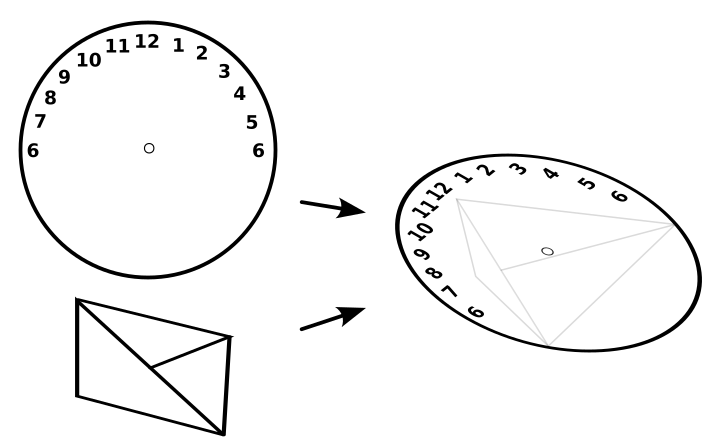
I think it looks best approximately centered, but the angle of the circle is the only important part. If your time-of-day circle extends beyond the edge of the base, you can elevate the corner with another box, or trim the circle--whatever works for you. -
Cut out a rectangular piece to serve as a platform for the sun tracker.
The exact size of this rectangle is not important.
Cut one end into a point.
Mine was about 15cm by 50cm.
Poke a hole in the center and bolt it to the center of the time-of-day circle.
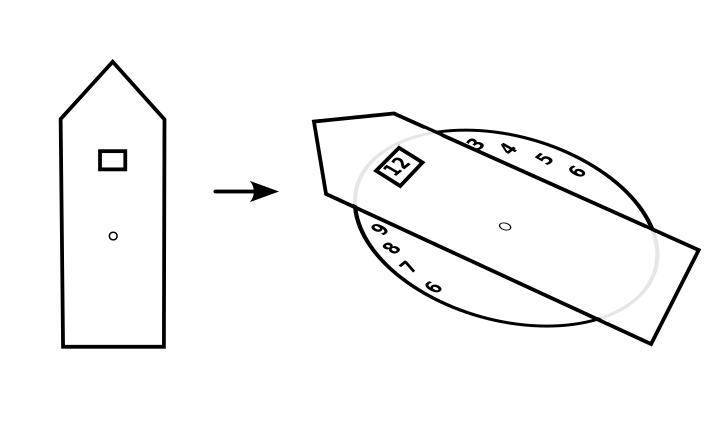
This platform should be able to spin freely on the time-of-day circle. - Cut out a small window somewhere on the rotating platform. Orient the platform so this window is at the top of the time-of-day circle. With a marker, write the number 12 on the time-of-day circle inside the window. This represents noon. 6am should be on the left side of the circle, and 6pm should be on the right side of the circle. You can fill in all 24 hours at regular intervals.
-
Cut out another wheel.
This will represent the day-of-year.
Mine had a radius of about 15cm.
Poke a hole in the center, and another hole exactly 13cm from the center.
Build a little tower to hold this wheel vertically,
and mount it near the back of the rotating platform.
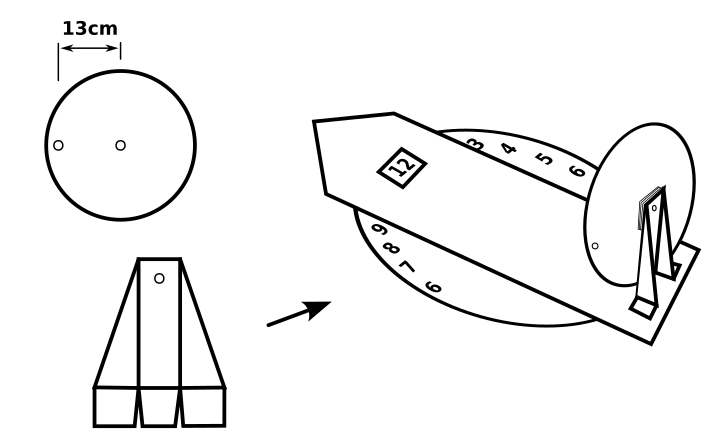
It will help in future steps if the wheel is spaced a little bit from the tower. So I recommend poking holes in a few small squares of cardboard and inserting them between the tower and the day-of-year wheel. -
It will greatly reduce wobble if you add some guides to help keep the day-of-year wheel vertical.
Two folded strips of cardboard pressing gently on either side of the bottom of the wheel should work fine.
Just make sure the hole near the outer edge of the wheel is not obstructed.
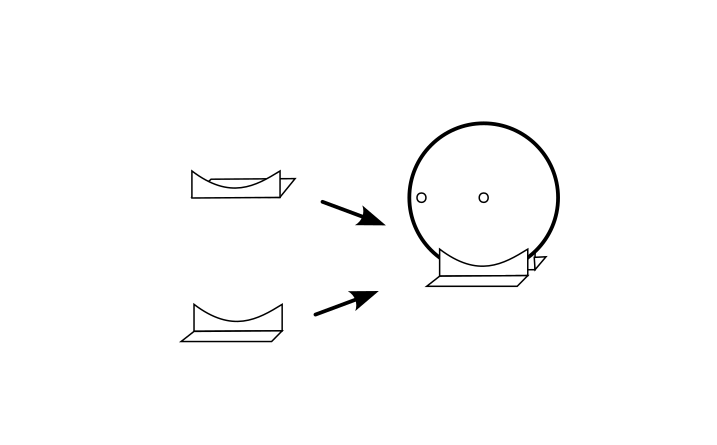
(These guides will not appear on future diagrams, but they should still be there. You'll just have to use your imagination.) -
Make a rectangular box about the same width as your platform,
and exactly the same height as the center of your day-of-year wheel.
Mount it exactly 30cm away from the day-of-year wheel.
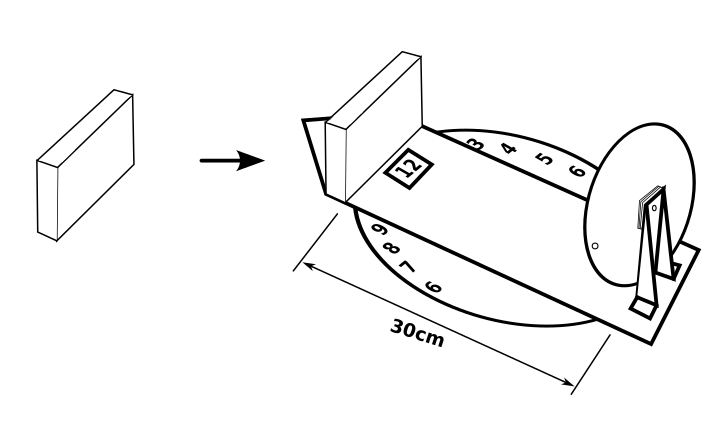
-
Cut out two rectangular surfaces.
The width of both surfaces should be about the same as your platform.
The length of one surface should be at least 34cm.
Put a hinge or a bend in this surface exactly 29cm from one end.
Poke a hole in the center at about 27cm.
The other surface should be about 32cm long.
Make both ends of this surface slightly pointed.
Poke a hole near one of the points.
Mount a nail or hangar to extend a few centimeters from the other point.
Pin these two surfaces together at the holes you made, so they can swivel.
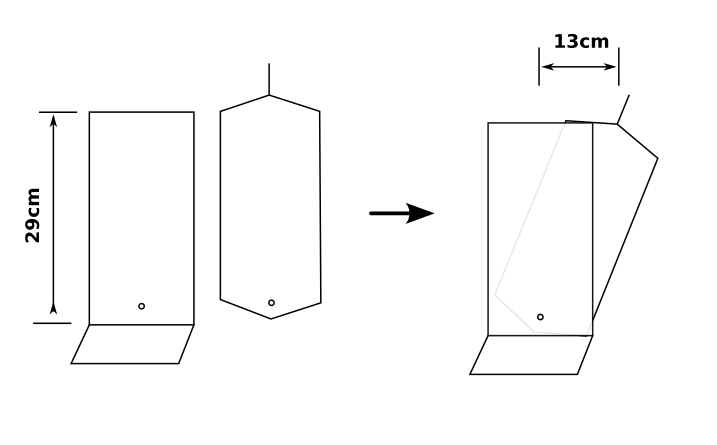
-
Mount the swivel assembly to the box you made 30cm away from the day-of-year wheel.
Make sure the hinge or bend is exactly 30cm away from the wheel.
The nail or hanger should pass through the outer hole on the day-of-year wheel.
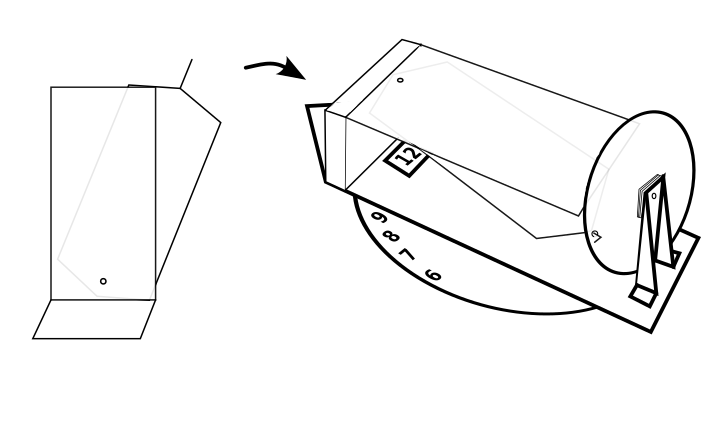
Now, when you rotate the day-of-year wheel, the pointed surface should swivel side-to-side, and the hinged surface should tilt up-and-down. (That ratio of 13cm to 30cm creates the proper tilt that corresponds with the tilt of the Earth's axis of 23.4 degrees.) -
Mount a tube and a screen on the top surface.
When the device is pointing at the sun,
the sunlight should pass through the tube and hit the screen.
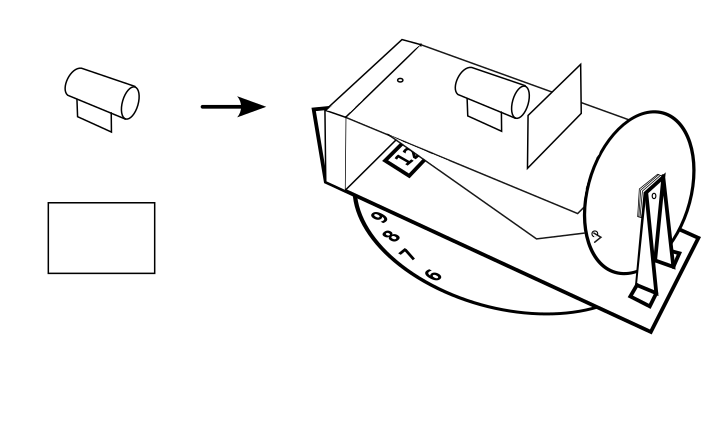
- When the day-of-year wheel is at the lowest point (making the tube point most upward), that represents the Summer Solstice (around June 21). When it is at the highest point (making the tube point most downward), that represents the Winter Solstice (around December 21). (I am assuming you are in the Northern Hemisphere. If you are in the Southern Hemisphere, June 21 is called the Winter Solstice, and corresponds with the position that makes the tube point most downward.) You can fill in the other days of the year at regular intervals. It doesn't really matter if you go clockwise or counterclockwise, since the angle of the platform that supports the tube will be the same either way.
- To use the sun tracker, set it on a level surface, with the cut corner facing south. Set the day-of-year wheel to the current date. Rotate the top assembly until the correct time-of-day shows in the window. (Note that this is Solar Time, which may differ from Clock Time in your local time zone, and may be off by an extra hour if your local time zone participates in Daylight Saving Time.) Then, calibrate it (by shoving wedges of cardboard under the base) until sunlight passes through the tube.
If you want to help improve these instructions, you can save this page to your computer, make your changes, then send a copy to me.
You may use or derive from these instructions for any purpose, without attribution or fee.